
What Happens When a Family No Longer Has to Worry About Their Next Meal?
By WOH Canada | Published June 2026
The Question Nobody Wants to Answer
There is a question that millions of parents in Pakistan wake up answering every single morning.
Not out loud. Never out loud.
They answer it silently, before their feet touch the ground, before the sun has fully risen, before their children have opened their eyes.
The question is:
What will we eat today?
Not “what should we have for dinner.” Not “are we in the mood for something warm.” Not the comfortable deliberation of people who have options.
Just the single, suffocating question of whether there will be anything at all.
For over 36 million people living in food insecurity across Pakistan, this is not a temporary question. It is not the result of a bad week or an unexpected expense. It is the question that defines waking hours, shapes every decision, and shadows every moment of daily life.
It is the question that parents carry so their children do not have to.
It is the question that WOH Canada exists to answer.
What Food Insecurity in Pakistan Actually Looks Like
Before we can understand what changes when that question is finally answered, we must understand what it truly costs to live with it.
Food insecurity is not a statistic. It does not look like a number in a report or a percentage on a graph.
It looks like a mother who sits at the edge of the kitchen, staring at a near-empty bag of flour, silently calculating whether she can make it last two more days by reducing each portion by half.
It looks like a father who walks to work with nothing in his stomach because there was only enough for the children, and he could not let them see him eat first.
It looks like a seven-year-old girl who tells her teacher her stomach hurts and the teacher already knows why, and neither of them says anything because neither of them can change it.
It looks like a grandmother who takes the smallest piece at every meal, every day, without being asked, because she has spent sixty years of her life making sure everyone else ate before she did.
These are not dramatic scenes. They are quiet ones. Hunger is almost always quiet. It does not announce itself. It moves through families like a slow, invisible erosion.
According to the United Nations World Food Programme, Pakistan faces one of the most severe food insecurity crises in South Asia. Widespread poverty, climate-driven crop failures, and economic instability have pushed millions of rural families to the breaking point. The people most affected are the ones furthest from urban centres, the ones already carrying the weight of limited infrastructure, no reliable income, and no safety net when things go wrong.
They are the communities WOH Canada’s food relief program was built to reach.
A Family of Seven. One Month. Nothing Guaranteed.
Picture a family in rural Pakistan. Seven people. A father who works seasonal agricultural labour when work is available. A mother managing a home with very little. Three children between the ages of four and twelve. An elderly grandmother. A teenage son who has had to leave school to help bring in income.
There is no fixed monthly wage. There is no government food subsidy they can access reliably. There are good weeks and terrible weeks, and the terrible weeks come without warning.
During a difficult stretch, this is what their reality looks like.
The father rations every purchase. Oil is measured in tablespoons. Wheat flour is stretched past the point it was meant to go. Rice, when they have it, is cooked thin. Lentils are served without spices because spices cost money the family does not have right now.
The children eat first. Always. The parents eat whatever remains, which is sometimes very little.
The twelve-year-old has started bringing home lower marks at school. Not because she is less intelligent than she was three months ago. Because a child who eats one inadequate meal a day cannot concentrate the way a fed child can. Her teacher has noticed. She has not.
The four-year-old is thin in a way that should concern a doctor, but the nearest clinic is expensive and far away. He is tired more often than a four-year-old should be. He does not run around the way he used to. His grandmother watches him and does not say what she is thinking.
The teenage son has quietly decided he will not return to school next term. The family needs him working. He has not told his parents he had been hoping to become an engineer. That dream feels very far away right now.
This family is not fictional. This family exists across thousands of villages in Pakistan right now, today, carrying this weight in silence.
The Day Everything Shifts
Then something arrives.
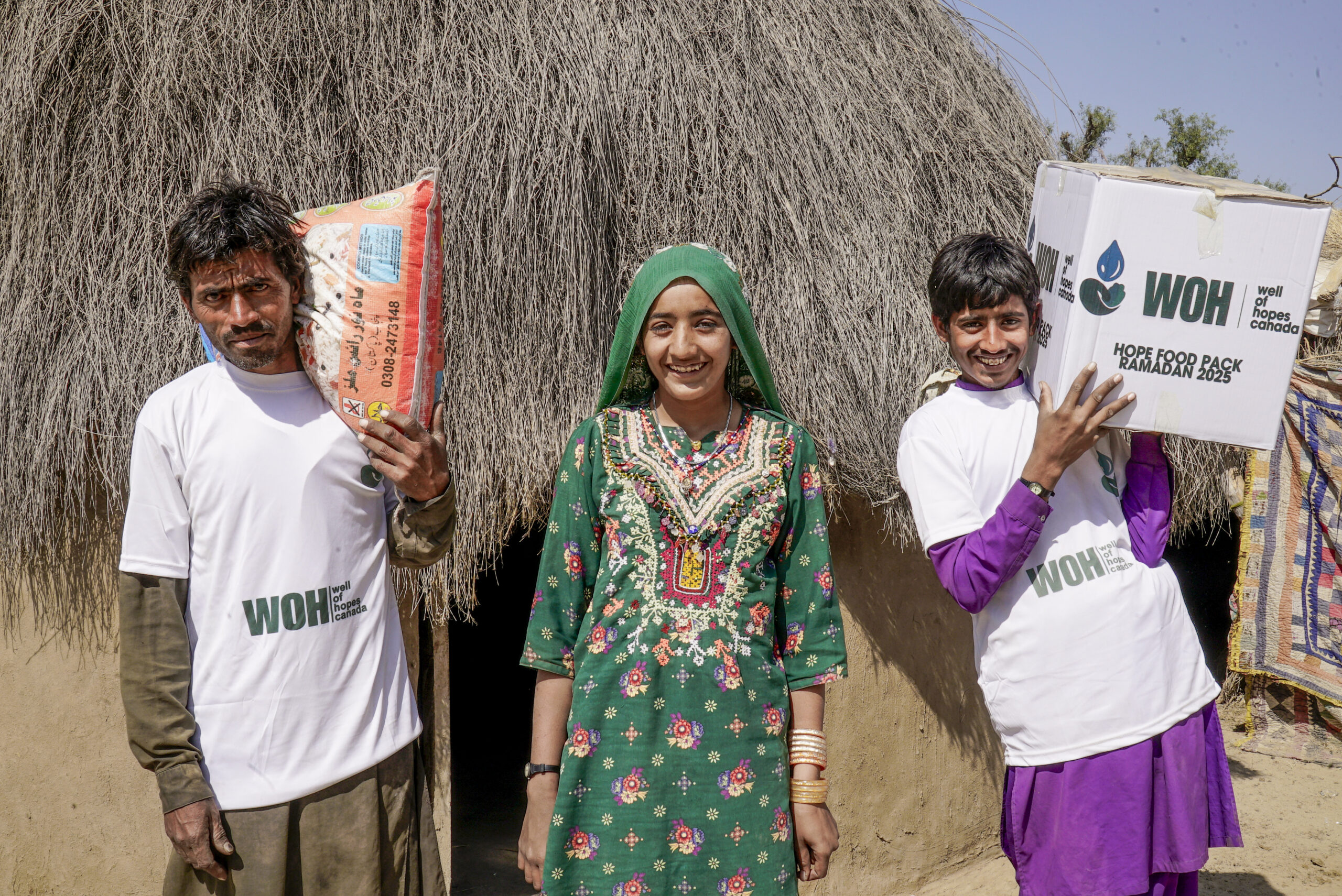
A WOH Canada Hope Food Pack reaches the family.
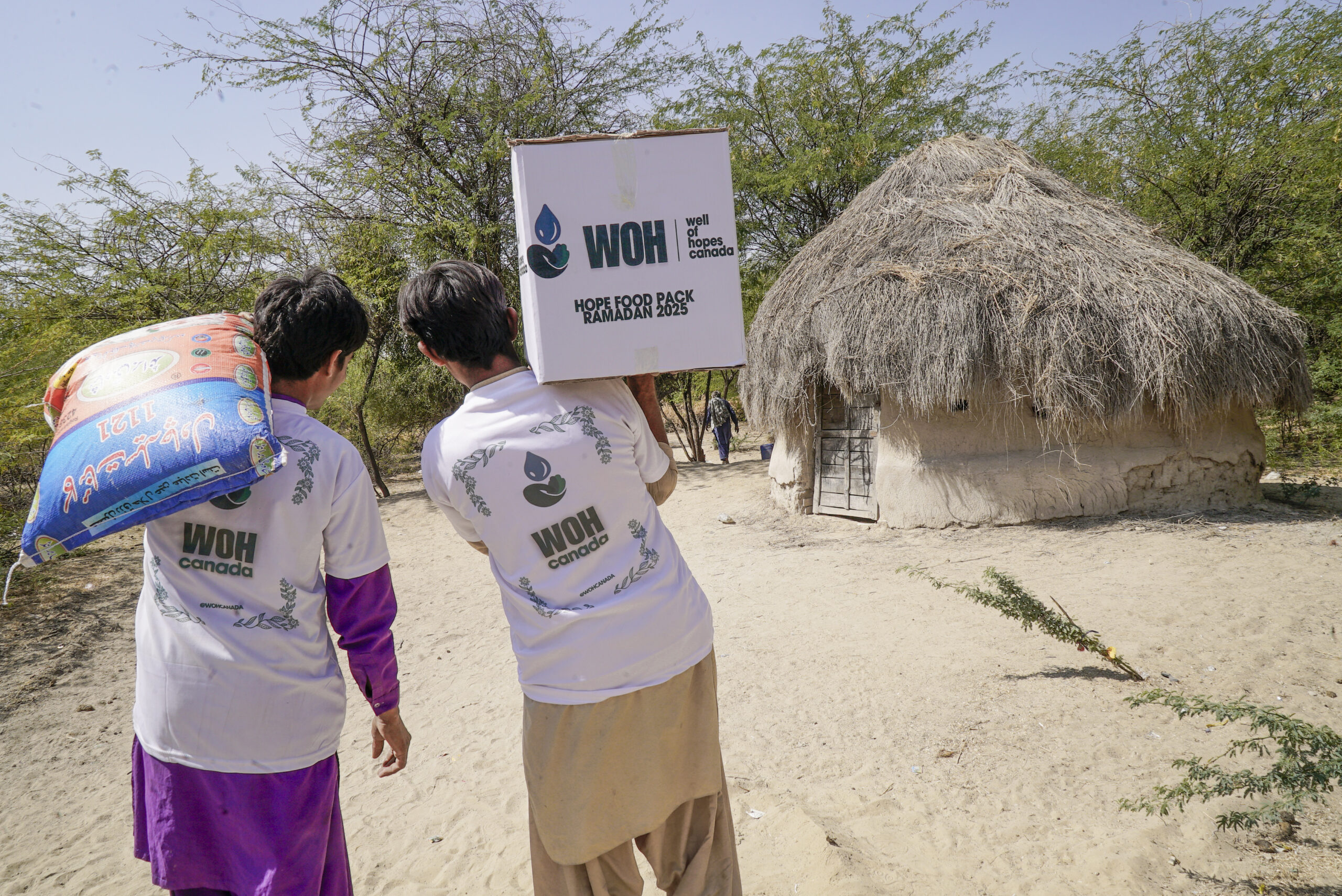
It does not arrive with fanfare. There is no ceremony. There are no cameras pointed at their tears to make a good promotional clip. There is simply a box of food, carefully assembled, delivered to their door.
And in the moment they open it, something shifts in the atmosphere of their home that cannot fully be described in words.
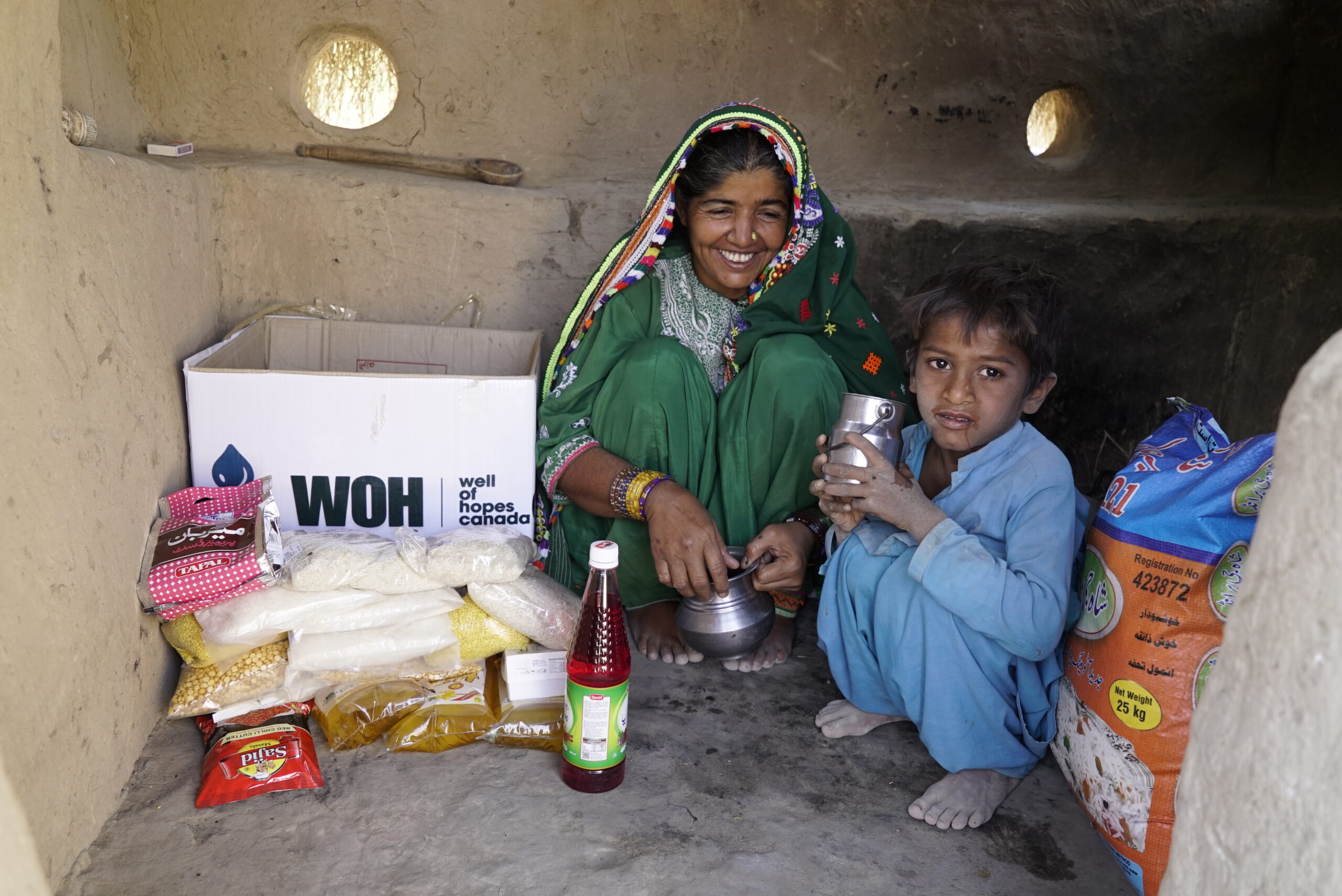
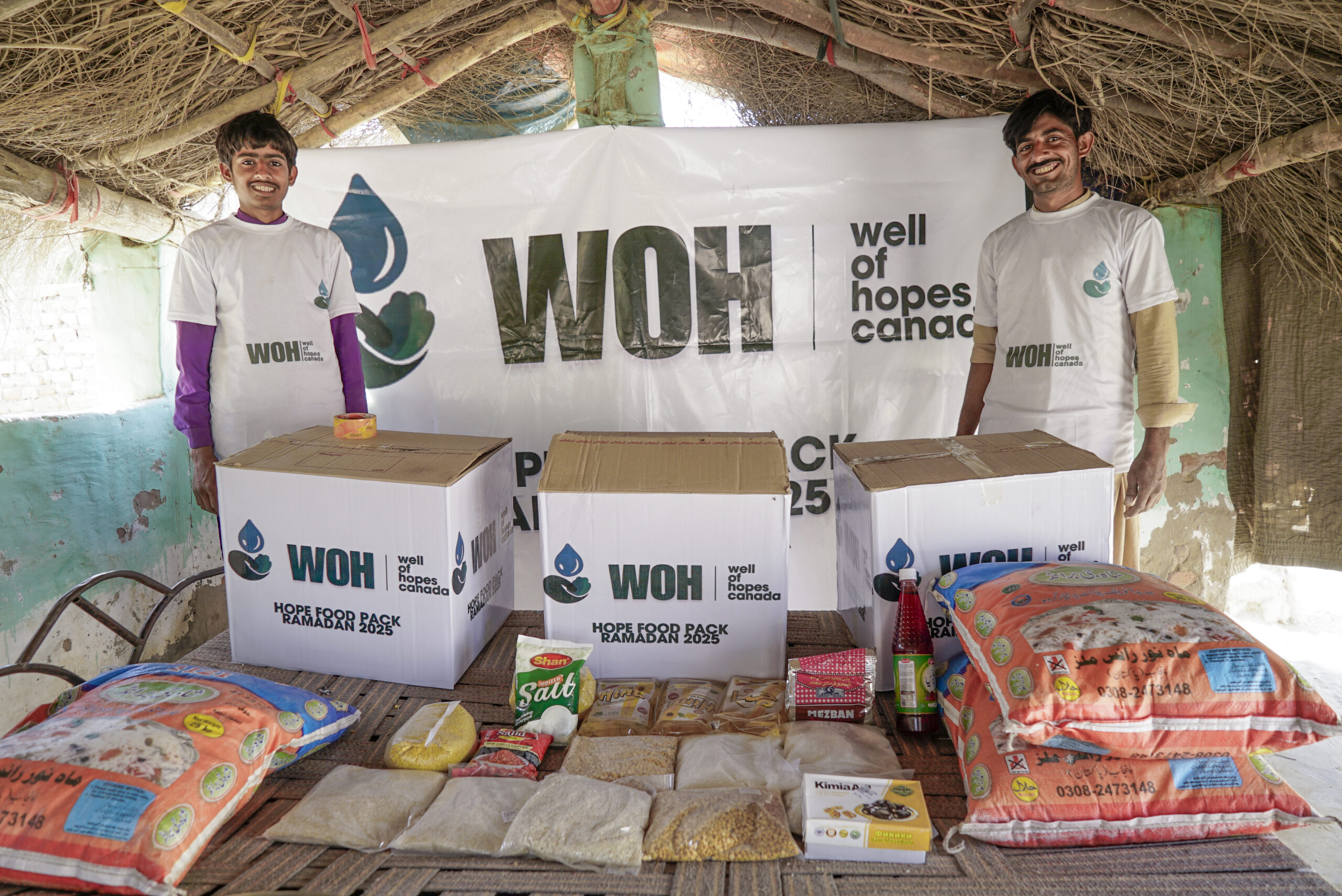
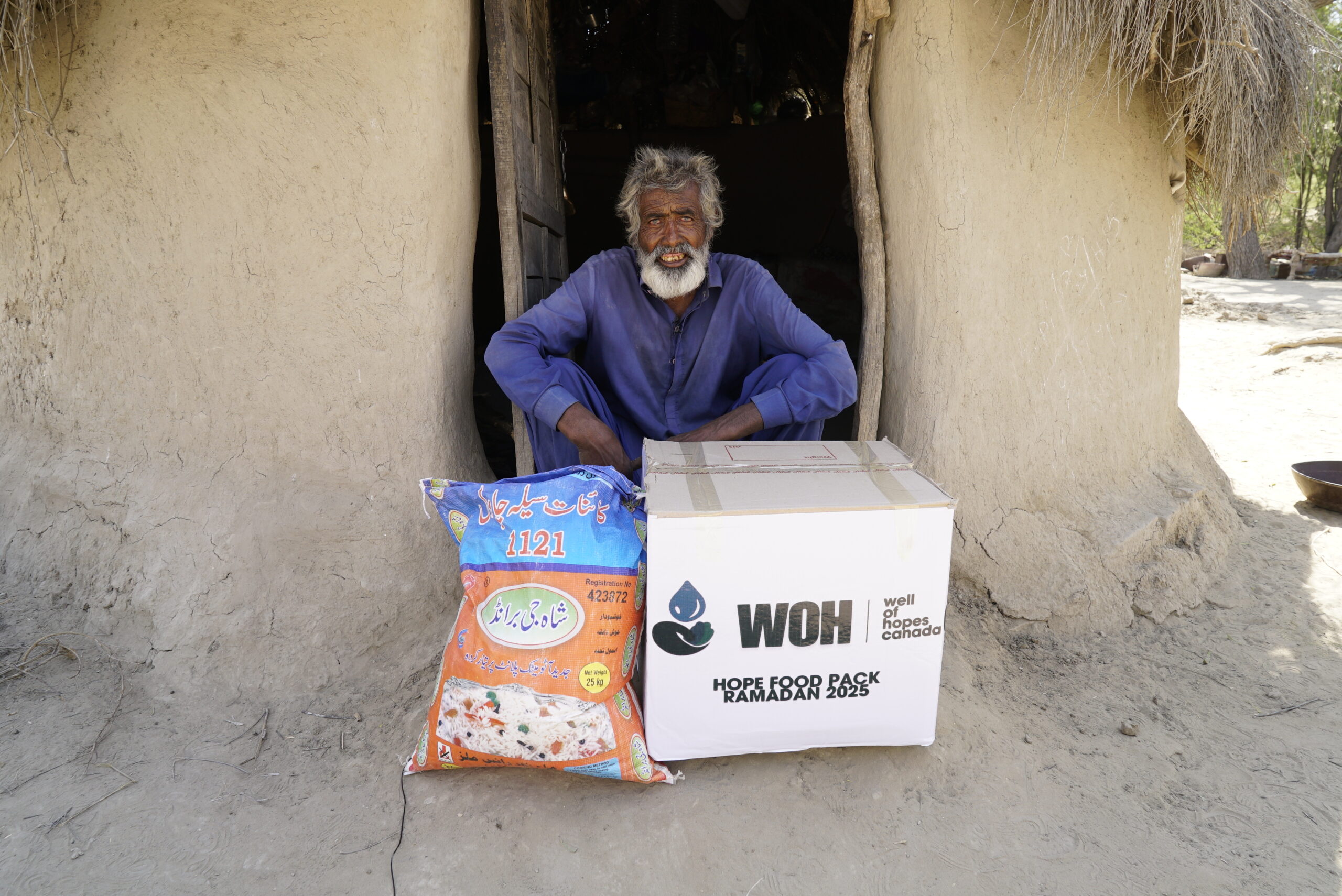
The mother runs her hands over the contents slowly. Wheat flour. Rice. Lentils. Cooking oil. Sugar. Spices. Dates. Rooh Afza. Biscuits. Mixed pickles. Enough to feed her entire family of seven people for thirty days.
She does not speak for a moment.
The father looks at it and then looks away, because what he is feeling is too large for the small room they are standing in.
The twelve-year-old daughter picks up a packet of dates, and for the first time in weeks, she smiles the way children are supposed to smile.
The four-year-old reaches for a biscuit. His grandmother laughs. It is a real laugh. The first one in some time.
This is what happens when a family no longer has to worry about their next meal.
Not fireworks. No transformation visible from a distance. But something far more profound:
A household breathes again.
Inside the Hope Food Pack: What $84 CAD Actually Means
WOH Canada’s Hope Food Pack costs $84 CAD. That is the number. Let us sit with what that number actually represents.
For $84, a Canadian donor provides a complete supply of essential nutrition to a family of five to seven people for an entire month. Not a week. Not a few days. Thirty days of food security.
Each Hope Food Pack is thoughtfully compiled to match the nutritional needs and cultural food practices of families in Pakistan. Every item inside is chosen not just for caloric value but for the dignity of a proper, culturally meaningful meal.
Wheat Flour sits at the center of every meal in this part of Pakistan. Without it, there is no roti. Without roti, there is no meal. A bag of wheat flour in the Hope Food Pack does not just mean bread. It means the structure of daily life returning to what it should be.
Lentils provide the protein that growing children and working adults desperately need. When families cut back during hard times, protein is often the first thing to disappear. The inclusion of lentils means bodies begin receiving what they have been missing.
Cooking Oil is something that disappears quickly in a household that is rationing. Measured in spoonfuls when it should be measured in cups, its absence changes the texture and nutrition of every meal. Its presence in the pack means food can be prepared the way food is meant to be prepared.
Rice Basmati is more than a staple. For many Pakistani families, a proper rice dish is connected to celebration, to gathering, to the texture of home. Receiving rice basmati means a family can prepare a real meal. Not survival food. A meal with meaning.
Sugar and Spices might seem like small things. They are not. Flavour is dignity. A meal with proper seasoning tastes like home. It tastes like care. It tastes like the person preparing it had the resources to do it right. These small inclusions restore something invisible and essential.
Khajoor (Dates) carry profound significance in Islamic tradition. They are the food of breaking a fast. They are nutritionally rich. And for a child who has not had a sweet thing in weeks, they are a small piece of joy that costs almost nothing to give and means everything to receive.
Rooh Afza is more than a syrup. It is a taste of normalcy. A glass of chilled Rooh Afza drink is something children in Pakistan associate with happiness, with summer, with celebration. It is an emotional anchor as much as a nutritional one.
Biscuits in the hands of a hungry four-year-old are not just snacks. They are a moment where childhood briefly returns to what it should be.
Mixed Pickles complete the meal the way a family recognizes as complete. Small as they seem, they provide the final piece of a proper, dignified, culturally meaningful table.
This is what $84 buys. Not a gesture. Not a symbolic contribution. A month of real, proper, culturally meaningful meals for a family of five to seven.
Explore the full food relief process at WOH Canada to see exactly how your donation reaches a family in need.
What Changes After the First Week
The transformation that follows a Hope Food Pack does not arrive all at once. It arrives in layers, the way relief always does.
Day One: The mother prepares a full meal without calculating what she will have to sacrifice tomorrow to afford it. She seasons the food. She uses enough oil. She adds the spices. She feeds her family and then, for the first time in a long time, she eats a proper portion herself.
Day Three: The four-year-old has more energy. He is running again. Small things, noticed only by his grandmother, who is watching him the way grandmothers watch children they are worried about.
Day Five: The twelve-year-old sits down to do her homework without the dull headache that has been following her for weeks. She finishes her assignment. She reads ahead in her textbook. Her mother watches her from the doorway and does not say anything, but something in her chest loosens.
Day Seven: The father eats a full meal for the first time in longer than he wants to admit. He does not draw attention to it. He simply eats. And the weight of what he has been carrying shifts, even just slightly.
Day Fifteen: Halfway through the month and the food is still there. This is the moment that feels almost unreal to families who have spent so long in scarcity. Halfway through the month and there is still enough. The knowledge of this does something to the nervous system that cannot be overstated. It teaches the body that security is possible. That the floor will hold.
Day Thirty: The Hope Food Pack has provided thirty days of dignified, nutritious meals. The family is not yet out of poverty. There is more work to be done in this community and thousands of communities like it. But for thirty days, this particular family did not go to sleep wondering if tomorrow would bring food.
That is not nothing.
That is everything.
How Hunger Steals More Than Food
We think of hunger as a physical experience, and it is. But what it steals extends far beyond the body.
Hunger steals education. A child who is chronically underfed cannot concentrate. Their brains are using every available resource to manage the basic functioning of a malnourished body. There is nothing left for learning. When the Hope Food Pack arrives and children begin eating properly, teachers begin noticing within weeks. Attendance improves. Focus returns. The future becomes slightly more accessible.
Hunger steals dignity. There is a particular kind of shame that accompanies needing help with something as fundamental as food. Parents feel it acutely. They feel it when their children look at them with confusion about why dinner is thin again. They feel it when neighbors can see that something is wrong. A month of food security does not just feed bodies. It restores the quiet dignity of a family that can care for itself.
Hunger steals health. Malnutrition weakens immune systems. Children who are chronically undernourished become sick more often and take longer to recover. Mothers who are not eating enough during pregnancy risk serious complications for themselves and their infants. The Hope Food Pack addresses immediate nutritional needs, but it also provides a window of health recovery that compounds over time.
Hunger steals hope. This is the hardest one to measure and the easiest to see on people’s faces. When a family has been in survival mode for long enough, the idea of planning for the future becomes almost impossible. You cannot dream when you are managing a crisis. You cannot invest in tomorrow when today is consuming everything you have. Food security does not just feed people. It returns to them the cognitive and emotional space to imagine what comes next.
This is why WOH Canada’s food relief donations are not temporary fixes. They are bridges. They are thirty-day bridges across which families walk toward something more stable.
The WOH Canada Difference: Accountability You Can See
At WOH Canada, we understand that trust is everything when it comes to charitable giving. You deserve to know exactly where your donation goes and exactly how it reaches the people it was meant to serve.
That is why our food relief process begins long before any food is purchased. Our team in Pakistan conducts thorough needs assessments to identify which communities are facing the most severe food insecurity. We survey the population. We assess nutritional deficiencies. We map local food resources and evaluate accessibility, specifically in the remote areas where food supply is most scarce.
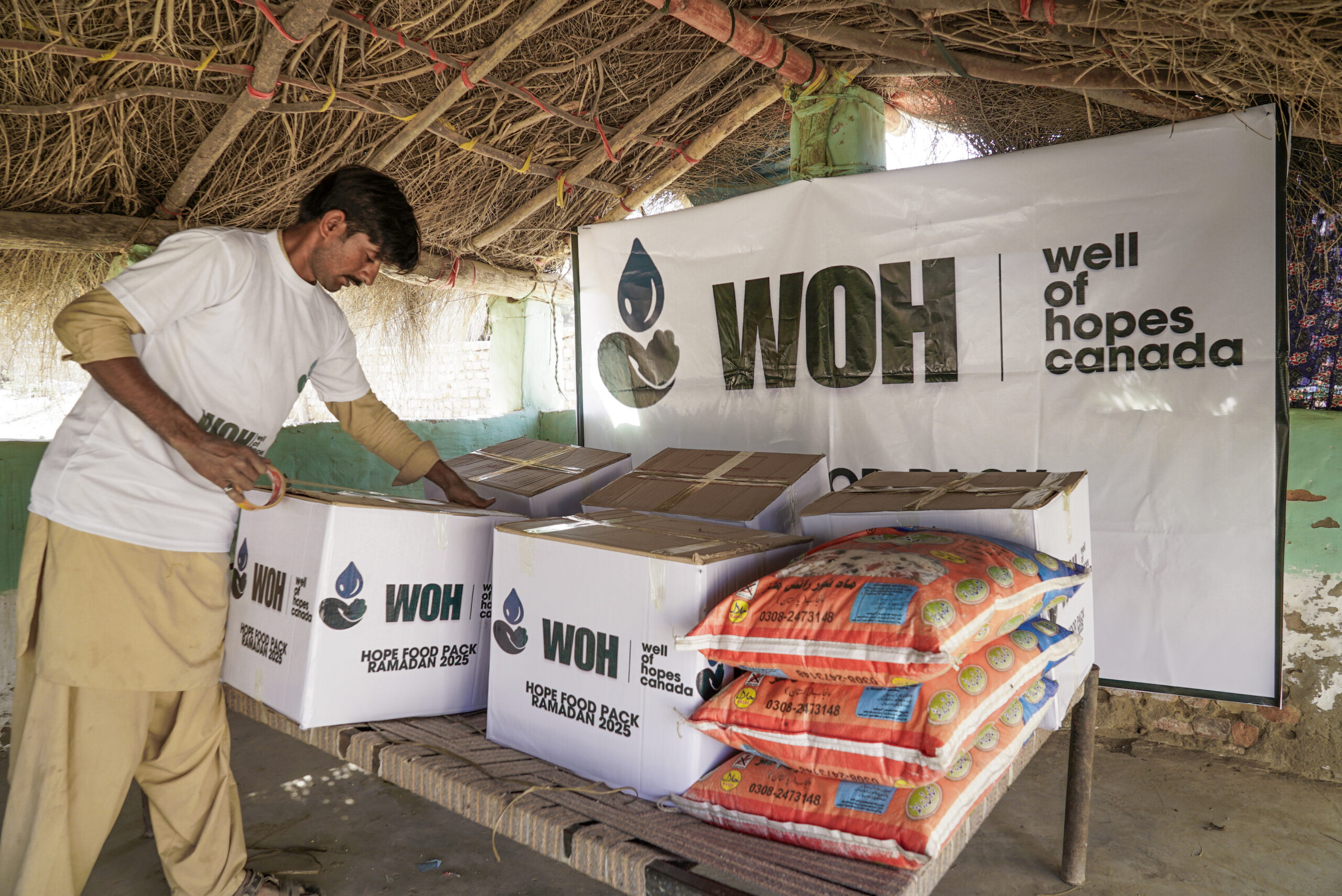
Once your donation is received, our team begins sourcing high-quality, nutritious food and ensuring proper storage and handling. We then organize distribution and deliver Hope Food Packs to families in need while maintaining strict quality and safety standards. The distribution events themselves become moments of community gathering, where families come together and where the generosity of donors like you is acknowledged.
You do not just fund this process and wonder what happened.
You receive regular photo updates showing the food at each stage of the journey. You receive progress reports. At the completion of the distribution, you receive a comprehensive report showing the number of people your contribution helped nourish.
You see faces. You see families. You see the food in the hands of the people it was intended for.
Because WOH Canada was built on the belief that transparency is not optional. It is the foundation of everything we do.
This is also why WOH Canada operates with a lean volunteer model where our founders personally cover all administrative expenses, ensuring that every cent of your donation reaches the people who need it. There is no overhead skimming your generosity. There is no administrative bloat diluting your impact.
Learn more about our values and approach on our Our Mission page.
The Sadaqah Jariyah of Feeding the Hungry
In Islamic tradition, feeding the hungry is among the most beloved and rewarding acts a person can perform.
The Prophet Muhammad, peace be upon him, said: “The best of you are those who feed others.” This is not a metaphor. It is a direct, specific instruction about the relationship between generosity and righteousness.
When you donate a Hope Food Pack through WOH Canada, you are participating in this tradition directly. You are feeding a family for thirty days. Every meal they prepare. Every bowl of rice. Every piece of roti. Every cup of lentils. Every date offered to a child. Every sip of a drink that tastes like something better than survival.
Each of these moments carries the weight of your generosity forward.
This is Sadaqah Jariyah. Ongoing charity. Charity that continues creating benefit beyond the moment of giving.
During the month of Ramadan, when WOH Canada runs its annual campaign, good deeds are believed to be multiplied 70 times. This is not a small spiritual note. It is the foundation upon which WOH Canada was built. Founded in 2021 by two volunteers seeking the most spiritually and practically impactful way to give during Ramadan, the organization concluded that addressing basic human needs, water, food, health, created the deepest and most lasting reward.
Your $84 Hope Food Pack donation during Ramadan is not just a month of food for one family. Under Islamic understanding, it is 70 times that act of giving, rewarded and reflected back upon you for as long as you live.
Your Zakat, the 2.5% of savings that Islam asks of those who are able, can be directed through WOH Canada toward food relief, fulfilling one of the five pillars of Islam through direct, measurable, transparent action. Use our Zakat Calculator to understand your obligation and direct it toward something that truly changes lives.
Explore all of our pricing options for food relief and water relief programs to find the form of giving that aligns with your capacity and intention.
The Teenager Who Can Dream Again
Let us return to the teenage son who had quietly decided not to return to school.
He had wanted to be an engineer. He had not told anyone because the distance between where he stood and that dream had become too vast to speak about.
After the Hope Food Pack arrived, something shifted in the family’s breathing room. Not completely. Not permanently yet. But enough.
His father, eating a proper meal for the first time in weeks, found the energy to think slightly further ahead. He spoke with a neighbor about a more stable work arrangement. Small steps. Uncertain steps. But steps.
His mother, no longer spending every waking moment calculating food portions, had the mental space to speak with her son. She asked him what he was thinking about. He told her, hesitantly, about engineering. She did not dismiss it. She was not in survival mode that evening. She had the capacity to imagine tomorrow.
He is back in school.
He is behind, and there is work to do. But he is back.
One Hope Food Pack. One family. One month of food security. And a teenager’s future reopened by the margin of thirty days.
This is what happens when a family no longer has to worry about their next meal.
You Are Not Too Far Away to Matter
Perhaps you are reading this in a city in Canada. In Hamilton, Toronto, Vancouver, or Calgary. Perhaps you are sitting somewhere warm, with a full refrigerator nearby, thinking about whether what you do could possibly reach a family in rural Pakistan.
It can.
It does.
Since 2021, WOH Canada has changed more than 10,000 lives across Pakistan. Through the generosity of 755 donors, our community has raised over $55,000 and delivered 187+ clean water systems to communities in need, alongside food relief programs that have reached families across multiple regions.
These numbers are made of individual decisions. Individual moments where someone chose to act.
An $84 Hope Food Pack is not an abstract contribution to a cause. It is a specific box of food, assembled by real hands, carried by real volunteers, placed into the arms of a real family, eaten at a real table, by real children who are hungry.
You are not too far away.
You are exactly close enough.
What You Can Do Right Now
The path to ending food insecurity in Pakistan is long. WOH Canada does not promise to walk it alone or to finish it quickly. But every step matters and every step begins with someone choosing to take it.
There are several ways to join this movement today.
You can donate a Hope Food Pack for $84 and directly feed a family of five to seven people for thirty days. This is the most immediate, specific, and measurable act of hunger relief you can offer. Visit our Make a Donation page to contribute now.
You can direct your Zakat through WOH Canada’s food and water relief programs, fulfilling your Islamic obligation while creating verified, transparent impact. Use our Zakat Calculator to determine your amount.
You can start your own fundraising campaign through LaunchGood in honor of a loved one, for Ramadan, or simply as an act of personal generosity. Our community page shows you how.
You can double your impact through our corporate matching program, checking whether your employer will match your donation at no additional cost to you.
And if you are interested in the full scope of what WOH Canada makes possible, from food relief to water wells that serve entire villages, explore our pricing and options page to find the form of giving that speaks to you most.
The Answer to the Question
That question. The one that millions of parents answer silently before sunrise, before their children wake up, before the weight of the day fully settles on their shoulders.
What will we eat today?
For thirty days, for a family of five to seven people, for $84, WOH Canada gives them an answer.
We will eat.
All of us.
Today and tomorrow and the day after that and for the next thirty days.
We will eat.
That answer is not a small thing. It is not a minor relief or a marginal improvement. For a family that has been living with the relentless uncertainty of food insecurity in Pakistan, the knowledge that this question has been answered is the difference between a home that is surviving and a home that is living.
A fed child learns.
A fed mother plans.
A fed father hopes.
A fed grandmother laughs, and it is a real laugh, the kind that belongs in a home, the kind that disappears when hunger takes up too much of the air.
This is what happens when a family no longer has to worry about their next meal.
And you can be the reason it happens.
Ready To Build Your Well?
$297. Your name engraved. 50 people served
daily. Complete your donation in under 5 minutes.